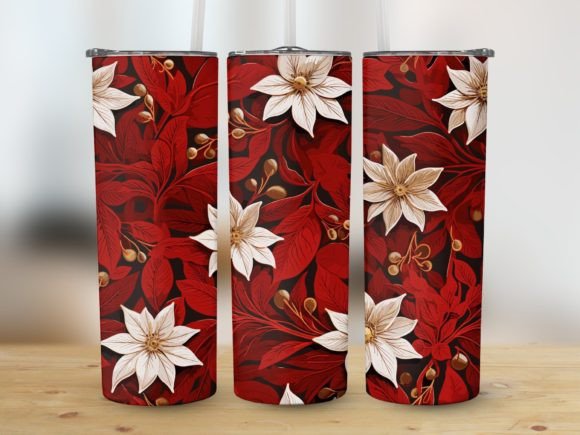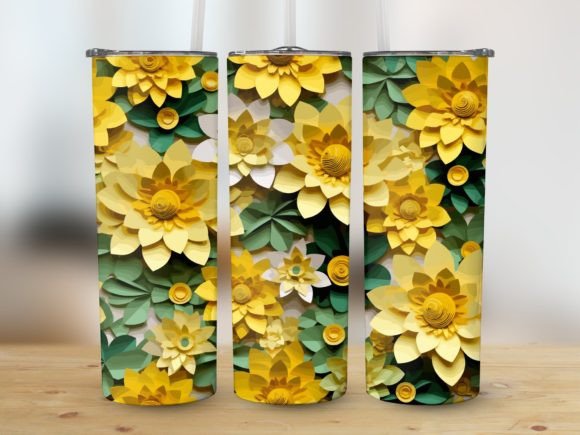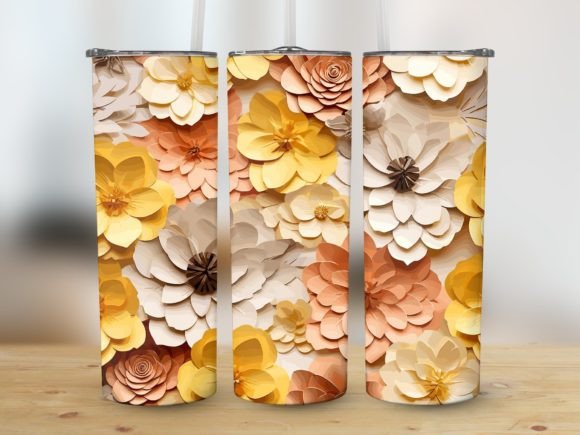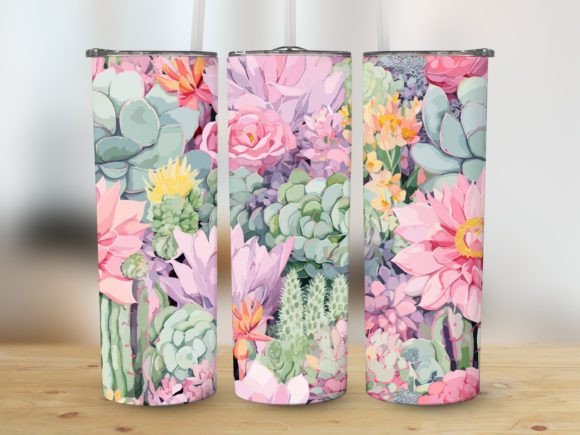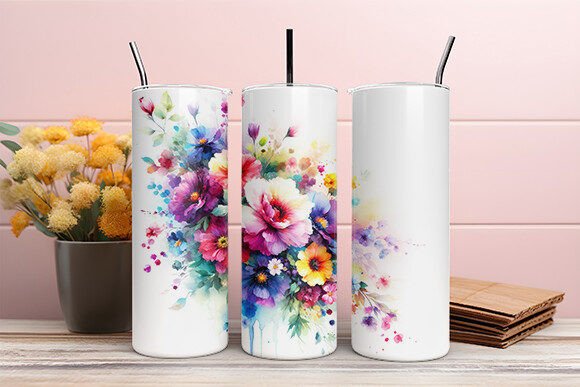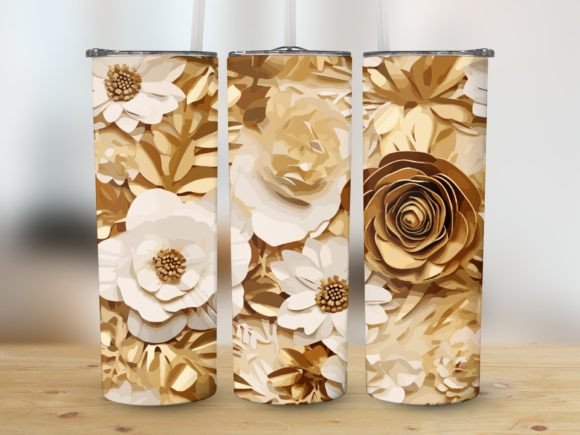
20oz Tumbler Wrap Sublimationsdesign Png
Let’s be honest: I opened this 20oz Tumbler Wrap Sublimationsdesign Png expecting a flat, repeatable floral motif — something safe for sublimation mugs. What I found instead was a surprisingly dimensional, tightly composed bloom cluster with soft shadowing and layered petal depth. It doesn’t scream “embroidery-ready” at first glance — it’s a PNG, not an embroidery file — but as a designer who regularly converts graphics into machine embroidery designs, I immediately started mentally mapping how this would translate to thread on fabric.
Last week, I used it as the visual foundation for a custom embroidered tote bag for a local florist’s pop-up shop. The client wanted “something botanical but elevated — not dainty, not fussy.” I traced the core floral silhouette from the PNG, simplified the inner detail just enough for satin-stitch clarity, and built a clean 3.8" x 4.2" hoop-friendly version. That real-world test told me more than any spec sheet ever could.
A Design That Breathes — Not Just Fills Space
The 20oz Tumbler Wrap Sublimationsdesign Png feels intentional in its asymmetry. It’s not centered like a cookie-cutter logo; the blooms lean slightly left, with one stem curving down and out — perfect for wrapping around a curved surface like a tumbler, yes, but also ideal for organic placement on a sweatshirt chest or apron pocket. Its 2790 x 2460 pixel size at 300 DPI gives you serious room to scale without losing edge integrity — crucial when adapting for embroidery where every pixel becomes a stitch path.
Mood-wise? It reads warm, grounded, and quietly confident — more cottage-core apothecary than millennial pink. That makes it unusually versatile across product types: baby embroidery (think onesie back pockets), holiday embroidery (a linen tea towel for spring brunch), or even boutique branding (embroidered patches for small-batch ceramic mugs). It avoids looking “designed for print only,” which is rare for graphics labeled under Crafts and Graphics.
Where It Shines — And Where It Needs Your Eye
This isn’t a plug-and-play embroidery file — and that’s actually its strength. As a high-res PNG, it gives you full control over digitizing decisions. For custom apparel, I recommend simplifying the outermost petals into smooth satin-stitch borders and converting fine interior lines into light fill-stitch gradients. On a medium-weight cotton tote bag? It stitched cleanly with medium tear-away stabilizer and 40wt rayon. On a lightweight linen tea towel? I added a light cut-away backing — the design’s gentle curves held up, but thin fabric needs that extra support to prevent puckering.
It performs well on dark fabric — the contrast in the original PNG translates beautifully to rich thread palettes (deep moss greens, burnt sienna, charcoal grey). But avoid using it *as-is* on stretchy knits or curved caps without significant redrawing: those delicate stem transitions don’t digitize well onto tight-radius surfaces without stitch-jump risk. Likewise, skip dense fill-stitch attempts in the center cluster unless you’re using a commercial machine with strong tension control — the original’s 3D illusion relies on subtle tonal shifts, not heavy coverage.
Real Impact on Your Handmade Product
Customers notice intentionality. When I stitched this onto a cream-colored canvas apron for a baking studio, the finished product didn’t look “added on” — it looked like part of the garment’s story. That lifts perceived value. Buyers associate that kind of cohesion with care, professionalism, and brand consistency — especially important for Etsy sellers and small shop owners building recognition through tactile quality.
For personalized gifts? It works beautifully as a subtle monogram companion — place it beside a single initial on a pillow cover or baby blanket corner. It adds warmth without overwhelming. And because it’s floral but not overly literal (no roses, no daisies screaming “generic”), it avoids seasonal limitations. I’ve used variations of it for wedding favors, Mother’s Day bundles, and even small-batch nursery decor — always adjusting thread weight and density to match the item’s use.
Practical Designer Notes Before You Stitch
- Always test on scrap fabric first — especially if adapting for textured weaves or blends.
- Check thread color contrast early: what reads as soft shadow in the PNG may vanish as a low-contrast fill stitch.
- Review stitch density manually: the original’s depth suggests layering — don’t let your digitized version become too dense for breathable fabrics.
- Confirm hoop size compatibility: while the PNG scales freely, your final embroidery file must fit standard hoops (e.g., 4x4", 5x7") without distortion.
- Inspect small details: those delicate stem tips? They’ll need reinforcement or slight thickening in satin stitch to survive washing.
- Test black-and-white mockups: ensures legibility when reduced or printed on labels or packaging.
- Compare light vs. dark backgrounds: the design’s subtlety shines on natural fibers, but may need bolder outlines on deep-navy denim.
- Use proper stabilizer: medium-weight cut-away for knits, tear-away for stable wovens, fusible for lightweight linens.
- Verify licensing before selling finished items or digital products: this is a Graphics asset — confirm whether commercial use, resale of embroidered goods, or redistribution of derivative files is permitted.
Bottom line? The 20oz Tumbler Wrap Sublimationsdesign Png is more than a tumbler graphic — it’s a thoughtful, adaptable design asset. It rewards attention, invites thoughtful digitizing, and elevates handmade products when treated as a starting point, not a finish line. Whether you're prepping for craft fair inventory, building an Etsy embroidery collection, or designing for a local boutique, this one earns space in your working library — not as a shortcut, but as a quietly capable collaborator.