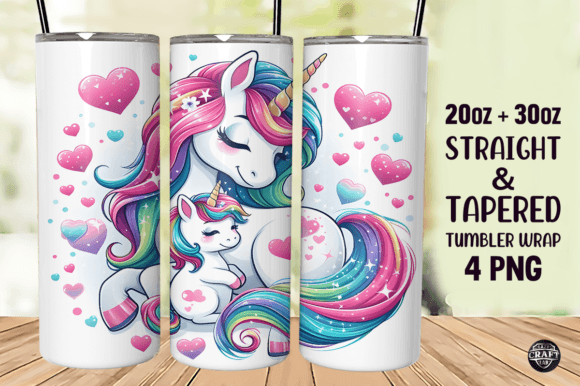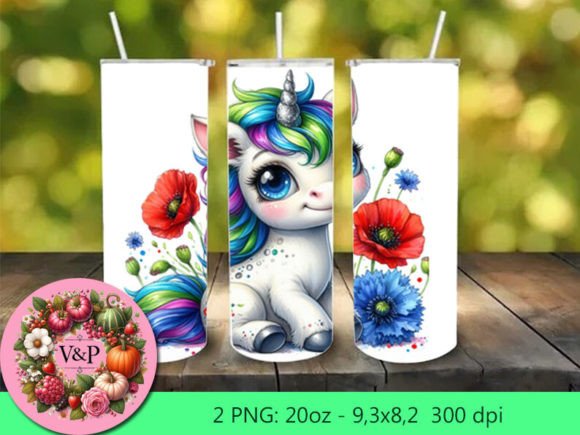
Tumbler Sublimation Designs Unicorn
First Impression: Whimsy That Translates—But Not Automatically
When I opened Tumbler Sublimation Designs Unicorn, my first thought wasn’t “cute”—it was “how will this hold up under needle and thread?” As someone who’s stitched unicorns on baby onesies, embroidered them onto linen tea towels for boutique consignment, and tested dozens of digital graphics for commercial embroidery clients, I know charm on screen rarely guarantees clarity in stitch. This design reads as joyful and cohesive at a glance: clean outlines, balanced negative space, and a tapered silhouette that clearly nods to tumbler wraps—but it’s not built for embroidery out of the box. It’s a PNG, not an embroidery file. That distinction matters deeply before you press “print” or load a hoop.
A Real-World Test: Stitching It Onto a Linen-Cotton Apron
Last week, I prepped a custom order for a local bakery owner—a set of embroidered aprons with playful food-themed motifs. She loved the idea of a subtle unicorn accent near the pocket, something whimsical but refined. I imported Tumbler Sublimation Designs Unicorn into my digitizing software and began converting it. The straight-and-tapered layout worked well for the curved edge of the apron’s front panel—but only after simplifying the horn’s tip and softening the mane’s inner edges. The original PNG has fine linework that would vanish in satin stitch or blur under fill density. On lightweight linen-cotton blend, without proper cutaway stabilizer, those delicate curves bunched. On heavier twill? They held beautifully—but only after adjusting stitch direction and reducing density by 15%.
Where It Shines—and Where It Stumbles—in Real Embroidery
Tumbler Sublimation Designs Unicorn excels as a starting point—not a finish line—for certain handmade products:
- Embroidered patches: Its clear silhouette and moderate scale (ideal for 3–4" hoops) make it a strong candidate for iron-on or sew-on patches—especially when paired with a simple border stitch.
- Tote bag designs: On canvas or medium-weight cotton, its tapered shape flows naturally along the side seam or bottom corner.
- Baby embroidery: Simplified versions work well on onesies or burp cloths—provided small details like eyelashes or star highlights are removed or re-digitized as single running stitches.
- Holiday or nursery decor: As part of a coordinated set (e.g., unicorn + moon + cloud), it adds gentle personality without overwhelming delicate fabrics.
It stumbles where precision and durability intersect:
- On stretchy knits—like sweatshirt fleece—the tapered ends pull unevenly unless stabilized with tear-away + topping.
- In dense fill areas (e.g., the unicorn’s body), thread buildup can distort thin fabrics or cause puckering on dark garments.
- On curved surfaces like caps, the straight-side version requires careful hooping and possibly splitting the design across two sections.
- For frequent-wash items (kitchen towels, kids’ clothing), untested stitch density may lead to fraying over time—especially around sharp interior corners.
Design Judgment: Does It Elevate Your Handmade Product?
Yes—if you treat it as raw material, not a finished asset. Tumbler Sublimation Designs Unicorn doesn’t scream “premium embroidery,” but it whispers “thoughtful customization.” Customers notice when stitching feels intentional, not just applied. A well-digitized version builds trust: it signals care in execution, consistency in brand voice (especially for Etsy sellers curating a magical-but-mature aesthetic), and respect for the garment’s integrity. Poorly adapted, it reads as generic—like slapping a stock graphic onto fabric without considering drape, texture, or wear.
I’ve seen this design lift the perceived value of personalized gifts: a unicorn-stitched pillow cover for a toddler’s birthday felt special because the proportions were adjusted to suit the fabric’s hand—not because the PNG was used as-is. Likewise, a boutique listing featuring Tumbler Sublimation Designs Unicorn alongside real stitched mockups (not just flat PNG previews) consistently outperformed listings using generic clipart.
Practical Embroidery Designer Notes
Before digitizing or stitching Tumbler Sublimation Designs Unicorn:
- Always test on scrap fabric matching your final product’s weight, stretch, and color.
- Check thread color contrast—especially on dark backgrounds; light pastel threads may disappear without underlay or topping.
- Review stitch density manually; PNGs don’t encode stitch logic, so overfilling is common in auto-digitized versions.
- Confirm hoop size compatibility; while the design fits standard 4x4 hoops, intricate tapering may require 5x7 for clean registration.
- Inspect small details at 200% zoom—tiny stars or horn spirals often need simplification or conversion to satin stitch borders.
- Test black-and-white mockups to assess visual weight and silhouette recognition without color distraction.
- Use appropriate stabilizer: cutaway for knits, tear-away for stable wovens, and water-soluble topping for textured surfaces.
- Verify licensing before selling finished embroidered items or reselling digitized versions—this is a digital download, not a commercial-use embroidery file by default.
Final Thought: A Solid Foundation—If You’re Willing to Build
Tumbler Sublimation Designs Unicorn won’t save you time if you expect plug-and-play embroidery. But for designers, craft business owners, and Etsy sellers who understand that great machine embroidery design begins with smart adaptation—not just pretty pixels—it’s a quietly versatile asset. It works best when treated like a sketch: inspiring, flexible, and ready for your expertise to bring it into the physical world with intention. Whether you’re stitching it onto a holiday gift, a boutique apron, or a custom patch for your craft fair table—start with respect for the fabric, the thread, and the hands that will hold the finished product. That’s where Tumbler Sublimation Designs Unicorn earns its place—not as a shortcut, but as a thoughtful starting point.