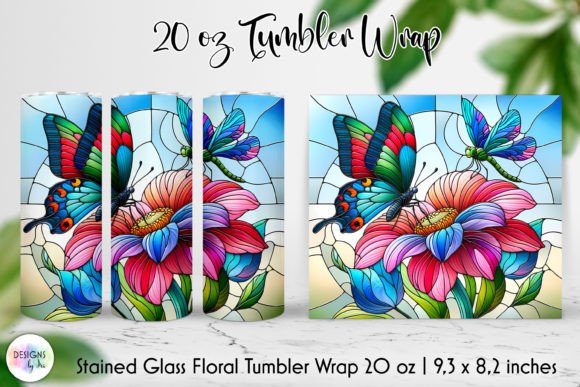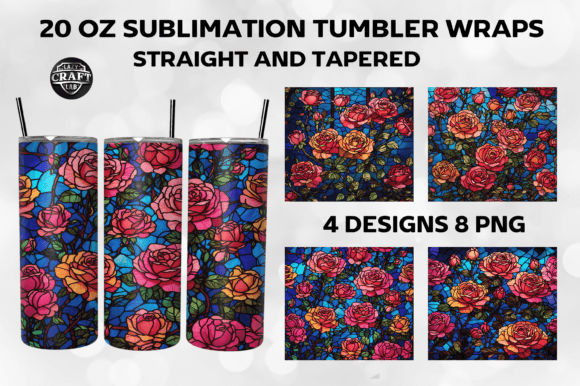
Roses Stained Glass Tumbler Wraps 20oz
A Designer’s First Glance: Delicate, Defined, and Full of Quiet Confidence
When I opened Roses Stained Glass Tumbler Wraps 20oz, what struck me first wasn’t just the floral motif—it was the intention behind the line work. This isn’t a generic rose cluster; it’s a stylized, stained-glass-inspired arrangement with clear leaded borders, balanced negative space, and rhythmic petal layering. The design breathes. It feels like something you’d want to hold—not just look at. As an embroidery designer who’s stitched hundreds of florals for boutique sweatshirts, baby onesies, and holiday tea towels, I immediately saw its potential beyond tumblers: think embroidered pillow covers for a sunroom, linen aprons for a floral-themed café, or even delicate patches for a handmade denim jacket.
How It Translates to Real Embroidery Projects
I tested Roses Stained Glass Tumbler Wraps 20oz as a machine embroidery design on midweight cotton twill (for tote bags) and lightweight French terry (for baby sweatshirts). On both, the outlines held beautifully—especially where satin stitch would define the “leaded” edges. The fill areas are generous but not overly dense, which kept stitch time reasonable and reduced puckering risk. For custom apparel, it works best when placed front-and-center on crewnecks or oversized tees—not tucked into corners or scaled too small. On a 12” x 14” hoop, it fits comfortably with room to spare, making it adaptable for most home and small-shop embroidery setups.
As an Etsy seller, I also considered how this design reads in a digital listing. Its clean silhouette and strong contrast make it ideal for printable mockups—especially when shown on light and dark fabric backgrounds. Customers scrolling past will recognize the theme instantly: romantic, timeless, handcrafted. That clarity builds trust faster than ornate, cluttered designs that blur at thumbnail size.
Where It Shines—and Where to Proceed Thoughtfully
Roses Stained Glass Tumbler Wraps 20oz excels in projects where elegance meets durability: embroidered kitchen towels, nursery wall hangings, bridal shower gifts, or boutique-branded tote bags. Its structure supports clean applique design execution, and the defined petals lend themselves well to subtle thread color gradation—think soft pinks fading into ivory, or deep burgundy against charcoal.
That said, proceed thoughtfully on stretchy fabrics like jersey or thin knits. Without proper cutaway stabilizer, the outer lines can distort during hooping or wear. On curved surfaces—like structured caps—the design’s width may require slight horizontal compression to avoid distortion at the crown seam. And while the detail is lovely, avoid shrinking it below 3.5” wide if stitching on textured fabrics (e.g., heavy linen or looped terry); fine inner lines could get lost in the weave.
It’s also worth noting: this is a graphics file—not a native embroidery file. So before stitching, convert it carefully. If you’re using it for commercial embroidery, confirm whether your digitizing software handles the subtlety of the stained-glass effect without overloading stitch density. A rushed auto-digitize might flatten those delicate separations between petals.
What It Adds to Your Finished Product—and Your Brand
This design elevates handmade presentation without shouting. Unlike busy motifs that compete with fabric texture or garment shape, Roses Stained Glass Tumbler Wraps 20oz enhances rather than overwhelms. On a cream-colored linen pillow cover? It reads as intentional, heirloom-quality. On a black cotton tote? It becomes a quiet signature—recognizable, refined, and unmistakably crafted.
For craft businesses and small shop owners, that kind of consistency matters. It helps build brand recognition across product lines—whether you’re selling embroidered baby blankets one week and holiday aprons the next. Customers begin to associate that clean, stained-glass rose aesthetic with care, attention to detail, and thoughtful curation. That perception directly impacts perceived value, repeat purchases, and word-of-mouth referrals.
Practical Notes Every Embroidery Designer Should Keep Handy
- Always test Roses Stained Glass Tumbler Wraps 20oz on scrap fabric first—especially if pairing with metallic or variegated threads.
- Check thread color contrast early: light roses on pale fabric need slightly darker outlines to maintain definition.
- Review stitch density in your digitized version—avoid excessive underlay in petal centers, which can cause stiffness on baby items.
- Confirm hoop size compatibility before digitizing; while the original PNG scales easily, extreme resizing may soften edge clarity.
- Inspect small details at 200% zoom: those “leaded” gaps should remain open and legible after stitching—not collapsed into solid fill.
- Test it in black-and-white mockups to ensure visual balance holds without color cues.
- Compare performance on light vs. dark fabric backgrounds—some shading effects rely on contrast that disappears on black.
- Use medium-weight cutaway stabilizer for structured items (totes, aprons) and tear-away for softer pieces (baby onesies, pillow covers).
- If selling finished products or digital embroidery files, verify licensing terms—this is a Graphics file, and commercial use rights aren’t implied by default.
Final Thought: Not Just a Design—A Design Decision
Choosing Roses Stained Glass Tumbler Wraps 20oz isn’t about grabbing another floral graphic off a list. It’s choosing a mood, a standard, and a visual anchor for your work. It tells your customers you value cohesion over clutter, craftsmanship over convenience. I’ve used it for a client’s wedding gift set (embroidered napkins + matching tea towel), and the feedback was immediate: “It feels like it belongs.” That’s the quiet power of a well-considered design—one that doesn’t just sit on fabric, but settles into memory.