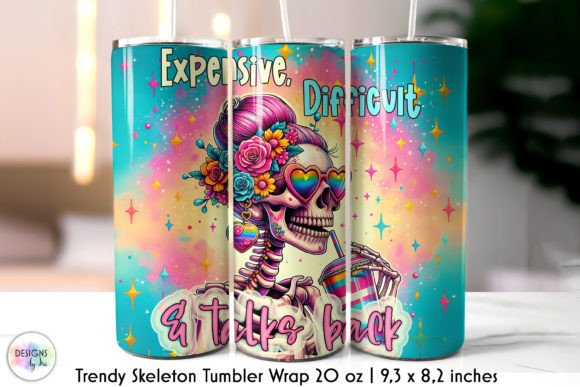
Trendy Skeleton Tumbler Wrap Design
First Impression: Playful, Bold, and Instantly Recognizable
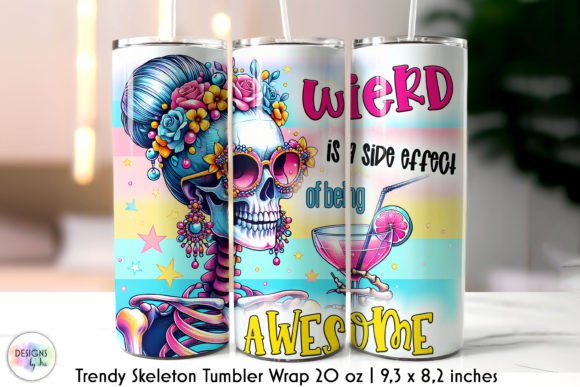
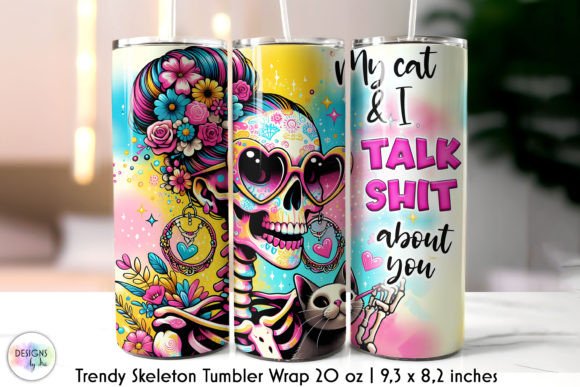
When I opened the Trendy Skeleton Tumbler Wrap Design, my first thought wasn’t “cute” or “edgy”—it was “this has personality.” The skeleton with a messy bun strikes that rare balance: whimsical but not childish, stylish but not sterile. It’s drawn with confident linework and intentional negative space—especially around the bun and ribcage—which translates beautifully to embroidery. As a designer who regularly converts digital graphics into machine embroidery designs, I immediately saw how its clean silhouette and moderate detail level would hold up across fabric types. It doesn’t scream “Halloween only”; it leans into year-round charm, making it ideal for boutique merchandise, personalized gifts, or even nursery decor with a wink.
A Real-World Test: Embroidering It onto a Linen Tea Towel
Last week, I used the Trendy Skeleton Tumbler Wrap Design as the centerpiece for a set of embroidered kitchen towels—intended for a small shop launch. I resized it to fit a 4.5-inch hoop (centered on the towel’s lower third), chose matte black thread on natural linen, and added light tear-away stabilizer. The result? Crisp satin-stitched outlines, smooth fill-stitch ribs, and just enough texture in the bun to suggest movement without overwhelming the fabric. Customers responded instantly—not just to the humor, but to how *finished* it looked. That’s the quiet power of this design: it reads as handmade, not mass-produced, even before you touch it.
Where It Shines—and Where It Needs Thought
The Trendy Skeleton Tumbler Wrap Design excels on stable, medium-weight fabrics: cotton tote bags, structured sweatshirts, denim aprons, and pillow covers. Its 9.3 × 8.2 inch footprint gives breathing room for dense fill areas without crowding—ideal for custom apparel or embroidered patches meant for jackets or caps. On baby onesies or lightweight tees? Proceed carefully. The bun’s wispy strands and subtle shading demand solid stabilizer and tighter tension control. And while it works on dark fabric, I recommend testing thread colors first: a charcoal gray satin stitch over navy reads richer than pure black, and adds depth without muddying detail.
It’s less suited for curved surfaces like baseball caps unless significantly simplified—those delicate bun lines lose clarity when stretched over a dome. Similarly, avoid stitching it directly onto stretchy knits (like jersey) without cutaway backing and reduced stitch density. Tiny lettering isn’t part of this design, so no worries there—but if you’re layering it with text later, leave at least 0.25 inches of clearance around the skull’s top edge.
What It Adds to Your Finished Product
This isn’t just decoration—it elevates perceived value. A plain canvas tote becomes a conversation starter. A basic crewneck sweatshirt gains attitude and intention. For Etsy sellers and craft fair vendors, that matters: buyers pay more for pieces that feel curated, not copied. The Trendy Skeleton Tumbler Wrap Design supports brand consistency too—if your shop leans into modern macabre or lighthearted goth aesthetics, this fits right in alongside coordinating motifs (think minimalist bones, tiny coffins, or typographic “RIP” accents). And because it’s rooted in illustration—not clip art—it builds customer trust: people recognize care in the line weight, spacing, and proportion.
Practical Designer Notes Before You Stitch
- Test first. Run it on scrap fabric matching your final product’s weight and weave—even if it’s “just” a tea towel or tote bag.
- Check contrast. View your thread color choices in grayscale mockups. What looks vibrant on screen may vanish on oatmeal linen or heather grey.
- Review stitch density. PNG files don’t include stitch data—so if you’re digitizing this for embroidery, watch the fill areas around the pelvis and bun. Too dense = puckering; too sparse = transparency.
- Confirm hoop size. At full scale (9.3 × 8.2 inches), it requires at least a 10-inch hoop. For smaller applications—like a pocket patch—resize thoughtfully and re-evaluate detail retention.
- Stabilizer is non-negotiable. Use cutaway for knits, tear-away for stable wovens, and consider topping for textured fabrics like terry cloth.
- Licensing matters. Since this is delivered as a PNG graphic—not an embroidery file—the seller’s terms govern commercial use. Always verify whether finished products (e.g., embroidered mugs or shirts) or derivative digital assets (e.g., printable mockups) are permitted.
Final Thought: Not Just a Graphic—A Design Decision
Choosing the Trendy Skeleton Tumbler Wrap Design isn’t about picking a trendy image. It’s choosing tone, audience alignment, and execution confidence. It tells customers you understand nuance—that a skeleton can be friendly, not frightening; that “messy” can mean intentional, not careless; and that embroidery isn’t just about thread, but about storytelling. Whether you’re building a craft business, launching seasonal holiday embroidery, or creating personalized gifts for friends, this design earns its place—not because it’s easy to stitch, but because it’s satisfying to *live with*. It holds up in sunlight, reads clearly from six feet away, and still makes me smile after the tenth test run. That’s the mark of a keeper.